Best Camping Cookware Sets (2026): Complete Guide to Better Outdoor Cooking
Introduction
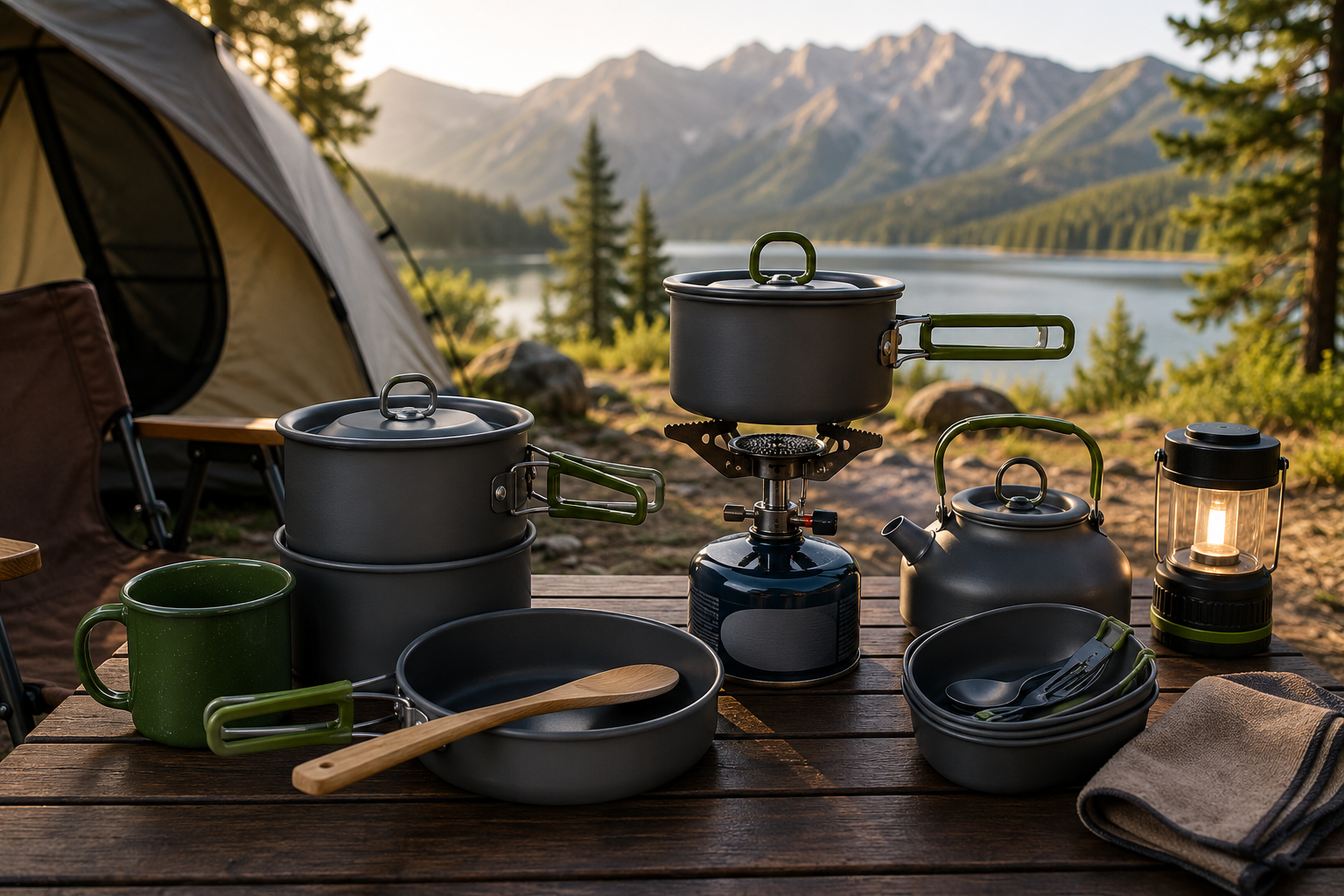
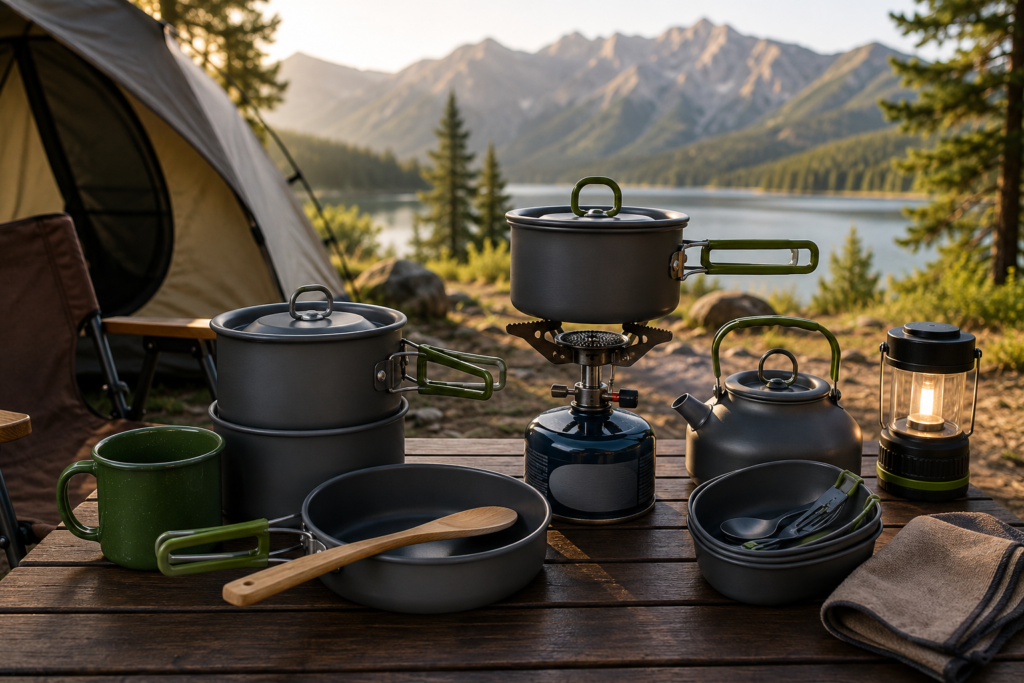
The best camping cookware sets make outdoor meal preparation easier, faster, and far more enjoyable. Whether you’re boiling water for morning coffee, cooking breakfast beside your SUV, or preparing dinner for the whole family, the right cookware can transform a basic campsite into a practical outdoor kitchen.
Camping cookware is designed differently from the pots and pans you use at home. Most sets prioritize compact storage, lightweight materials, durable construction, and nesting designs that allow multiple pieces to fit inside one another.
In this guide, we’ll look at the most useful types of camping cookware, compare popular materials, and explain the features that matter when choosing a set for car camping, family trips, or lightweight outdoor adventures.
Why Dedicated Camping Cookware Is Worth It
You could bring cookware from your home kitchen, but dedicated camping cookware offers several advantages.
Camping pots and pans are generally lighter and easier to transport. Many sets use folding or removable handles, allowing everything to pack into a surprisingly small space.
Nesting cookware is particularly useful for car campers. Pots, pans, cups, bowls, and utensils can often fit together inside a single storage bag, freeing valuable cargo space for other camping essentials.
Camping cookware is also designed to withstand outdoor conditions. Durable materials, simple construction, and easy-to-clean surfaces make these sets better suited to portable stoves and campsite cooking.
What Should a Camping Cookware Set Include?
The ideal camping cookware set depends on how many people you’re cooking for and what kinds of meals you usually prepare.
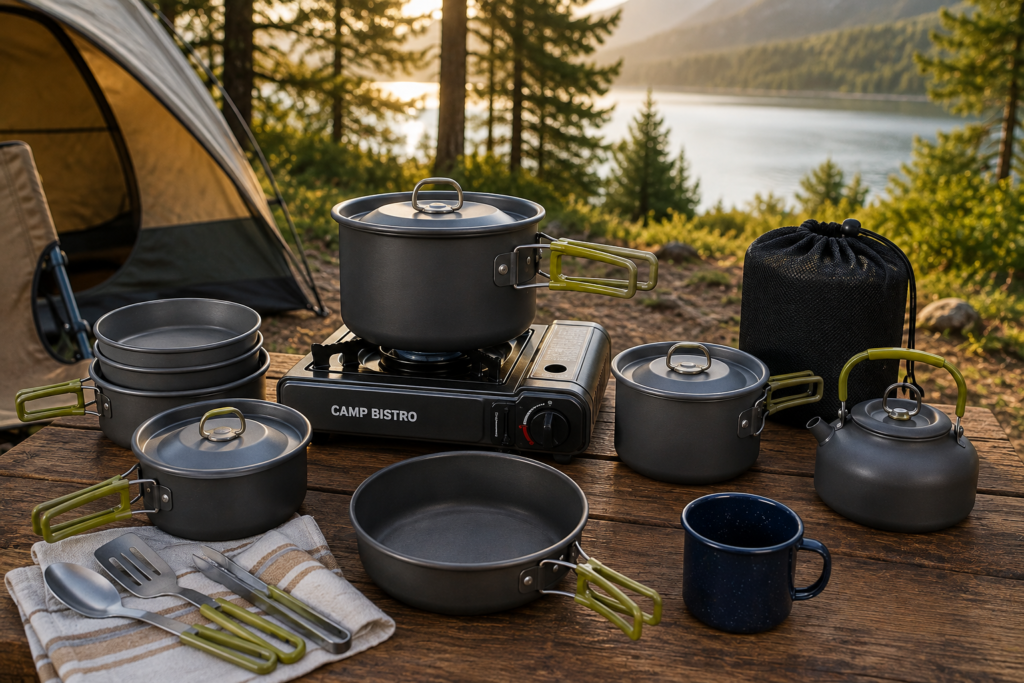
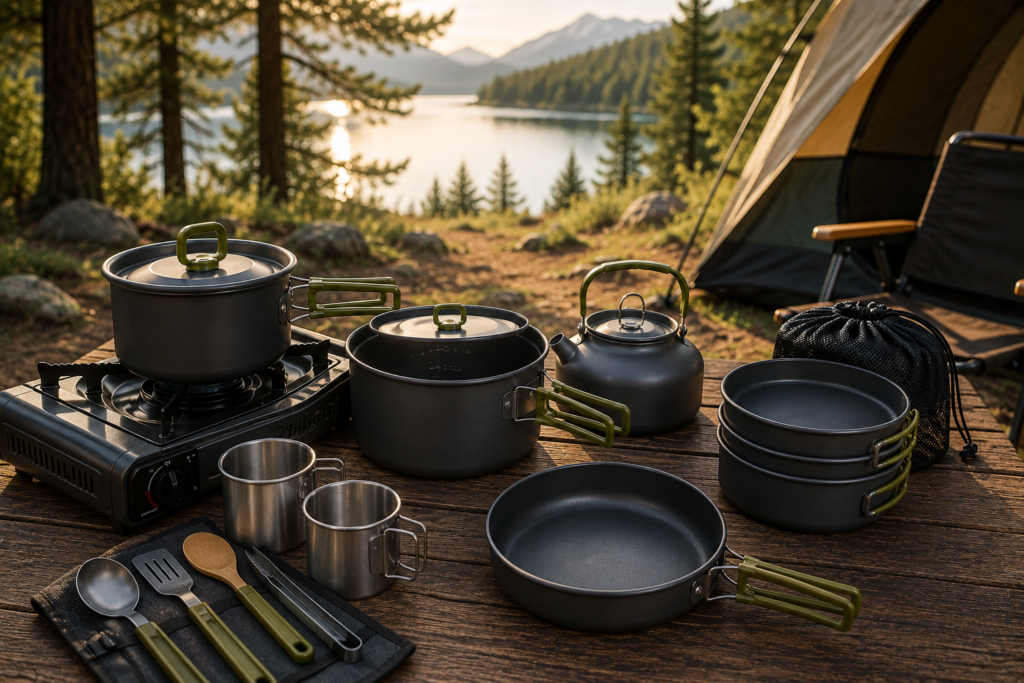
A versatile set typically includes:
- One medium or large cooking pot
- One smaller saucepan
- A frying pan
- Pot lids
- Folding or removable handles
- Cups or bowls
- Basic cooking utensils
- A storage or carrying bag
Solo campers may only need a compact pot and frying pan, while families benefit from larger cookware sets with multiple pots and serving pieces.
One feature worth prioritizing is nesting capability. When every component fits neatly inside the largest pot, storing your outdoor kitchen becomes much easier.
Choosing the Right Size
Cooking for one person requires very different cookware than preparing meals for a family of four.
Solo Camping
A compact one- or two-pot system is usually sufficient. Lightweight construction and small packed dimensions should be the priority.
Couples
Two campers typically benefit from a medium-sized pot, frying pan, and small kettle or saucepan. This provides enough flexibility for preparing complete meals without carrying unnecessary equipment.
Family Camping
For families and groups, look for larger pots and pans capable of preparing several servings at once. A set with multiple cooking vessels also allows different parts of the meal to be prepared simultaneously when paired with a dual-burner stove.
The best approach is to choose enough cookware for your typical group size without carrying pieces you’ll rarely use.
Best Materials for Camping Cookware
The material used in your camping cookware set affects weight, durability, cooking performance, cleaning, and price. There is no single material that’s perfect for every camper.
Aluminum Cookware
Aluminum is one of the most common materials used for camping cookware because it’s lightweight, affordable, and conducts heat efficiently.
Anodized aluminum is especially popular because the hardened surface improves durability and resistance to scratches.
It’s a great choice for:
- Car camping
- Family camping
- Weekend trips
- Campers wanting a balance of weight and durability
Stainless Steel Cookware
Stainless steel is heavier than aluminum but extremely durable. It handles frequent use well and is less likely to dent or scratch during transportation.
Stainless steel cookware is particularly useful for car campers who prioritize durability over weight.
Titanium Cookware
Titanium is extremely lightweight, strong, and corrosion-resistant. These advantages make it popular among backpackers and campers who want to minimize pack weight.
The downside is cost. Titanium cookware is typically much more expensive than aluminum or stainless steel alternatives.
Cast Iron
Cast iron provides excellent heat retention and is ideal for cooking over campfires or heavy-duty camping stoves.
However, its considerable weight makes it better suited to car camping than backpacking.
Features That Make Camping Cookware Easier to Use
Small design details can dramatically improve your outdoor cooking experience.
Folding Handles
Folding handles reduce packed size while making pots and pans easier to store. Look for handles that lock securely when extended so cookware remains stable while cooking.
Nonstick Coatings
Nonstick surfaces make cooking and cleanup easier, particularly when preparing foods such as eggs, pancakes, or fish.
Use wooden or silicone utensils whenever possible to prevent scratching the coating.
Secure Lids
A properly fitting lid speeds up boiling and reduces fuel consumption. Some camping cookware lids include drainage holes, allowing them to double as strainers.
Measurement Markings
Internal measurement markings are surprisingly useful when preparing dehydrated meals, rice, coffee, or recipes that require specific amounts of water.
Storage Bags
A durable storage bag keeps cookware organized and prevents soot or cooking residue from spreading to other camping equipment.
How to Care for Camping Cookware
Good cookware can last for many years when properly maintained.
Allow pots and pans to cool before washing them. Sudden temperature changes can warp lightweight cookware, particularly aluminum.
Use mild soap and a soft sponge rather than aggressive abrasive cleaners. After washing, dry every piece thoroughly before packing it away to prevent moisture buildup and corrosion.
If you cook directly over a campfire, soot may accumulate on the exterior. Cleaning it after each trip prevents residue from transferring onto other camping equipment.
Store your camping cookware set completely dry and loosely nested whenever possible. Proper care will keep handles, coatings, lids, and cooking surfaces performing reliably for many outdoor adventures.
Final Buying Tips Before You Choose
The best camping cookware sets should match the way you actually cook outdoors. Buying a large set filled with pieces you rarely use only takes up valuable storage space.
For most car campers and families, an anodized aluminum cookware set offers an excellent balance of durability, weight, cooking performance, and price. Stainless steel is a strong alternative when long-term durability matters more than weight, while titanium makes the most sense for backpackers who need to keep their packs as light as possible.
Before purchasing, check that the cookware works with your existing camping stove. Also consider how securely the handles lock, whether the pieces nest together, and how easily everything can be cleaned at the campsite.
A thoughtfully chosen cookware set simplifies meal preparation and keeps your camp kitchen organized, leaving you more time to enjoy the outdoors instead of managing piles of cooking equipment.
Frequently Asked Questions
What is the best material for camping cookware?
Anodized aluminum is one of the best all-around choices because it’s lightweight, durable, affordable, and distributes heat efficiently. Stainless steel works well for durability-focused car campers, while titanium is ideal for ultralight backpacking.
How large should a camping cookware set be?
Solo campers can usually manage with one or two cooking vessels. Couples benefit from a medium pot and frying pan, while families should consider larger multi-piece sets capable of preparing several servings.
Is nonstick camping cookware worth it?
Yes, particularly if you frequently cook eggs, pancakes, fish, or other foods that tend to stick. However, nonstick surfaces require careful cleaning and should be used with non-metal utensils.
Can I use camping cookware over a campfire?
Some stainless steel and cast-iron cookware can be used over an open fire. Always check the manufacturer’s instructions first because cookware with coated surfaces, plastic components, or certain folding handles may not be designed for direct flame.
Do I need separate cookware for camping?
It’s not absolutely necessary, but dedicated camping cookware is usually lighter, more compact, easier to store, and better suited to portable camping stoves than standard household cookware.
Internal Links
Best Portable Camping Stoves (2026): Complete Buyer’s Guide for Outdoor Cooking
Best Camping Lanterns (2026): Complete Buyer’s Guide for Safe and Bright Outdoor Adventures
Best Camping Tables (2026): Foldable Options for Every Adventure
Car Camping Essentials (2026): The Complete Guide for a Comfortable Outdoor Adventure
Related Guides
Best Camping Chairs (2026): Comfort and Portability Compared
Best Car Camping Sleeping Pads (2026): The Ultimate Buyer’s Guide for Better Sleep Outdoors
How to Organize Your SUV for Car Camping
Best SUV Accessories for Camping