Best Camping Sleeping Bags (2026): How to Choose the Right One for Every Season
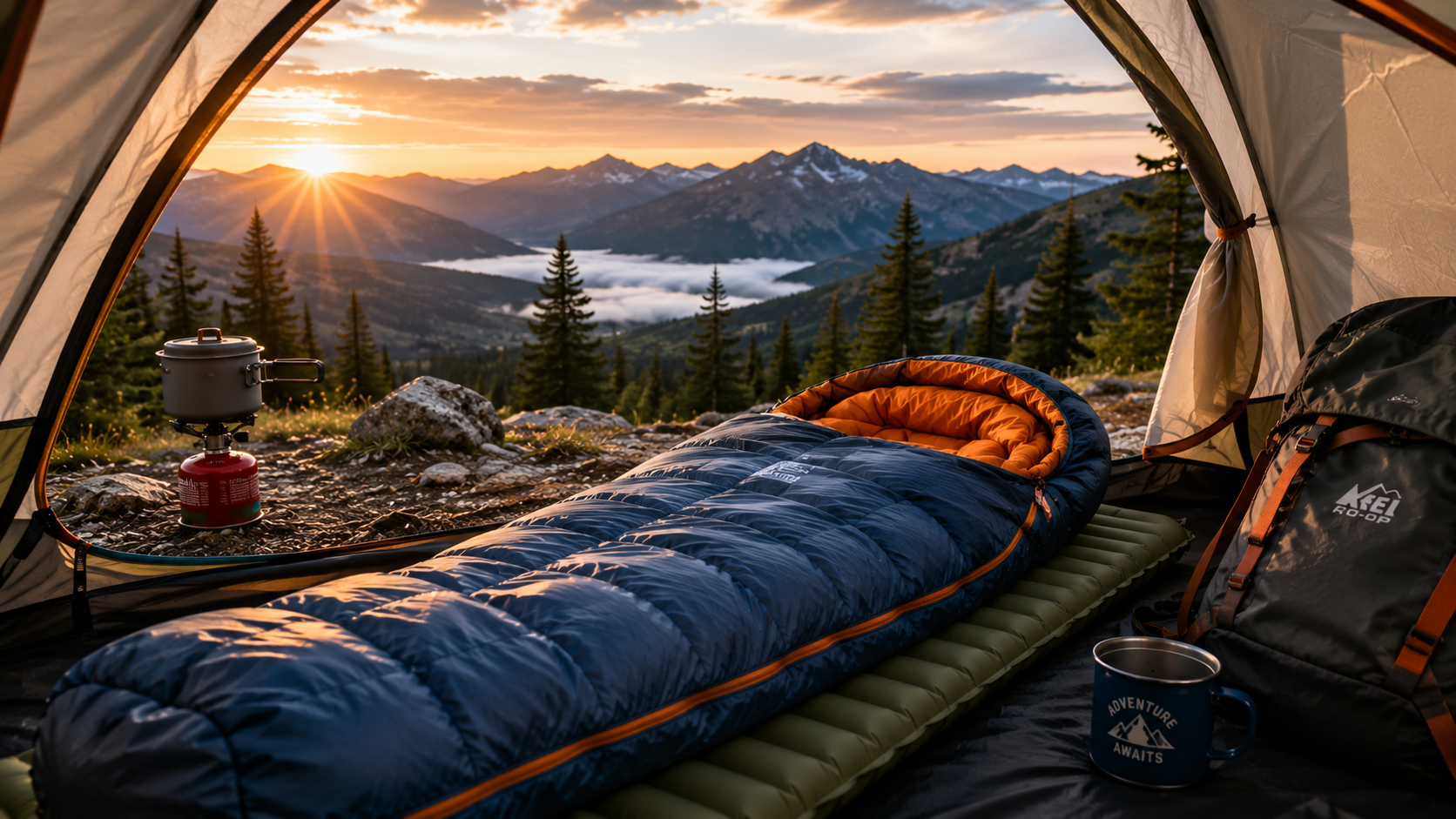
Best Camping Sleeping Bags can make the difference between a comfortable night outdoors and a sleepless camping trip.
Best Camping Sleeping Bags can make the difference between a comfortable night outdoors and a sleepless camping trip. After a long day of hiking, fishing, or relaxing around the campfire, your body needs quality rest to recover. While many campers spend time choosing the perfect tent or camping chair, a sleeping bag often has the greatest impact on how comfortable the night will be.
Choosing the best camping sleeping bag isn’t just about staying warm. The right sleeping bag provides proper insulation, improves sleep quality, and helps you wake up refreshed for another day outdoors. From temperature ratings to insulation types and bag shapes, understanding these features will help you make a smarter buying decision.
In this guide, you’ll learn how to choose the best camping sleeping bag for every season, compare the most popular styles, and discover the key features that matter before you buy. Whether you’re planning your first camping adventure or upgrading your camping gear for 2026, this guide will help you choose the Best Camping Sleeping Bags for your needs.
Best Camping Sleeping Bags: Why Choosing the Right One Matters
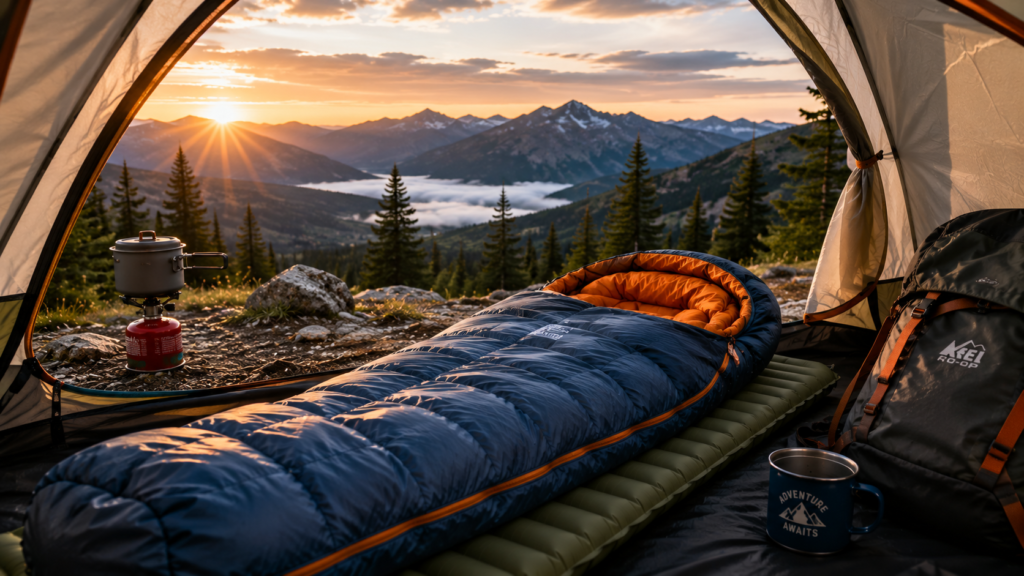
Best Camping Sleeping Bags are more than just a place to sleep. It plays a crucial role in keeping your body warm, maintaining comfort, and helping you recover after a long day outdoors. Even during summer, temperatures can drop significantly after sunset, especially in mountainous areas.
Choosing the wrong sleeping bag can leave you feeling cold, uncomfortable, or exhausted the next morning. A bag that is too warm can also make sleeping difficult on mild nights. That’s why selecting the right sleeping bag for your camping style and expected weather conditions is essential.
When comparing camping sleeping bags, pay attention to these key factors:
- Temperature Rating – Match the sleeping bag to the lowest temperature you expect.
- Insulation Type – Choose between lightweight down insulation or moisture-resistant synthetic insulation.
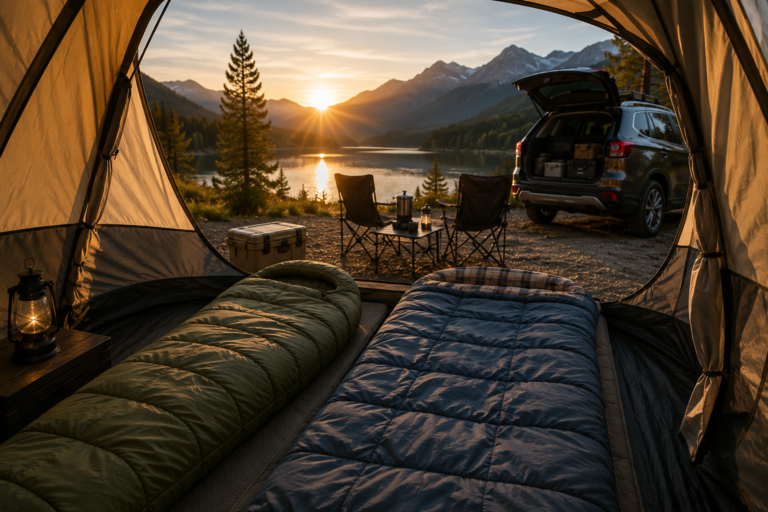
- Shape – Mummy bags provide maximum warmth, while rectangular bags offer extra room and comfort.
- Weight & Packability – Backpackers should prioritize lightweight and compact designs, while car campers can focus more on comfort and space.
Understanding these features will help you invest in a sleeping bag that keeps you warm, comfortable, and ready for every camping adventure.
Mummy vs. Rectangular Sleeping Bags
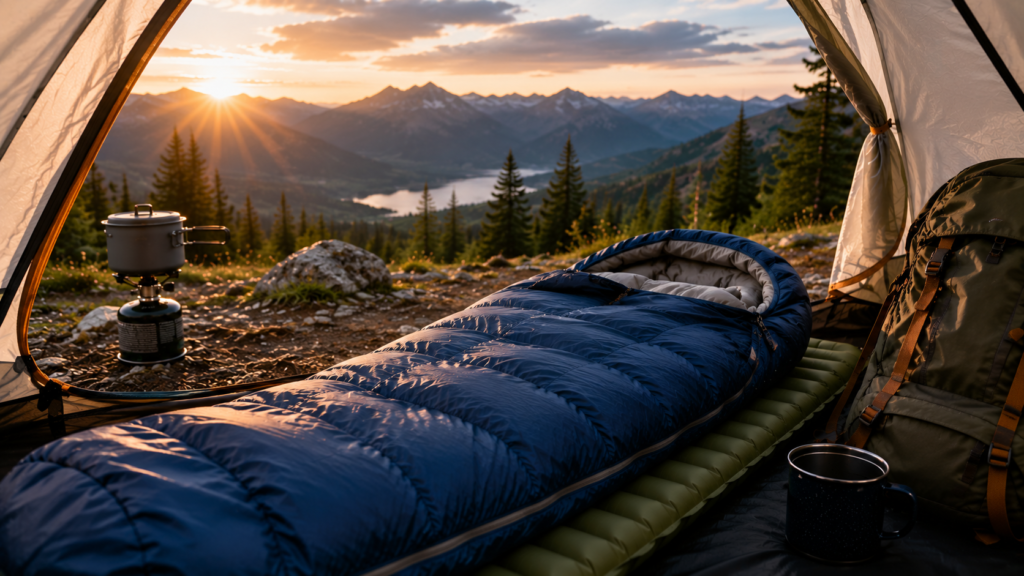
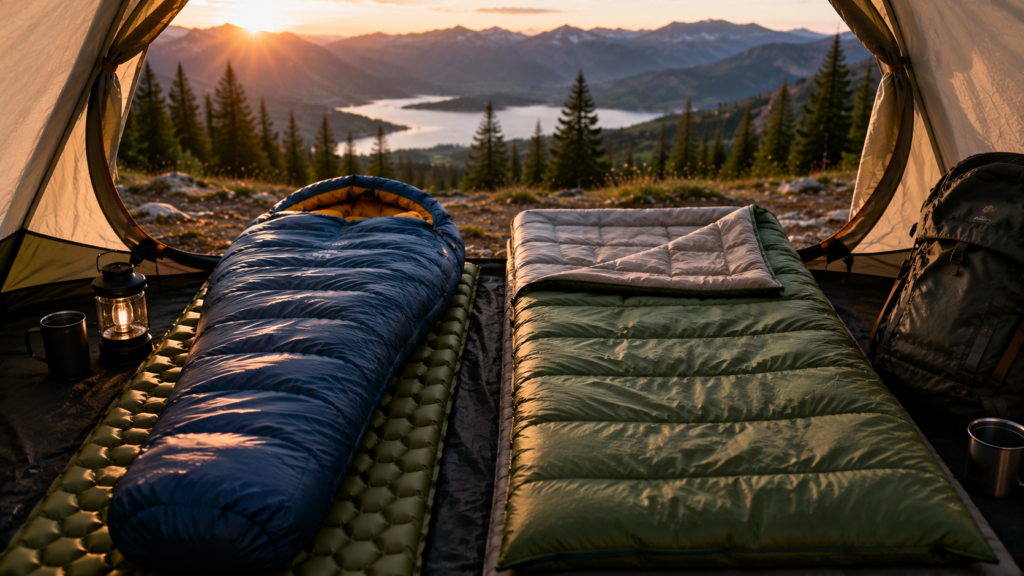
One of the first decisions when choosing the Best Camping Sleeping Bags is selecting the right shape. The two most common styles are mummy sleeping bags and rectangular sleeping bags, and each offers different advantages depending on how you camp.
Mummy Sleeping Bags
Mummy sleeping bags are designed to maximize warmth. Their tapered shape reduces empty space around your body, allowing them to retain heat more efficiently. Most models also include a hood that helps keep your head and neck warm on cold nights.
They’re an excellent choice for:
- Cold-weather camping
- Backpacking trips
- Mountain adventures
- Campers who prioritize warmth and lightweight gear
Rectangular Sleeping Bags
Rectangular sleeping bags offer more room to move while sleeping. They feel similar to a traditional blanket and are often preferred by campers who value comfort over maximum insulation.
They’re ideal for:
- Car camping
- Family camping
- Summer camping
- Campers who prefer extra sleeping space
Neither style is better for everyone. The best choice depends on your camping style, the expected temperatures, and how much weight you’re willing to carry.
Down vs. Synthetic Insulation
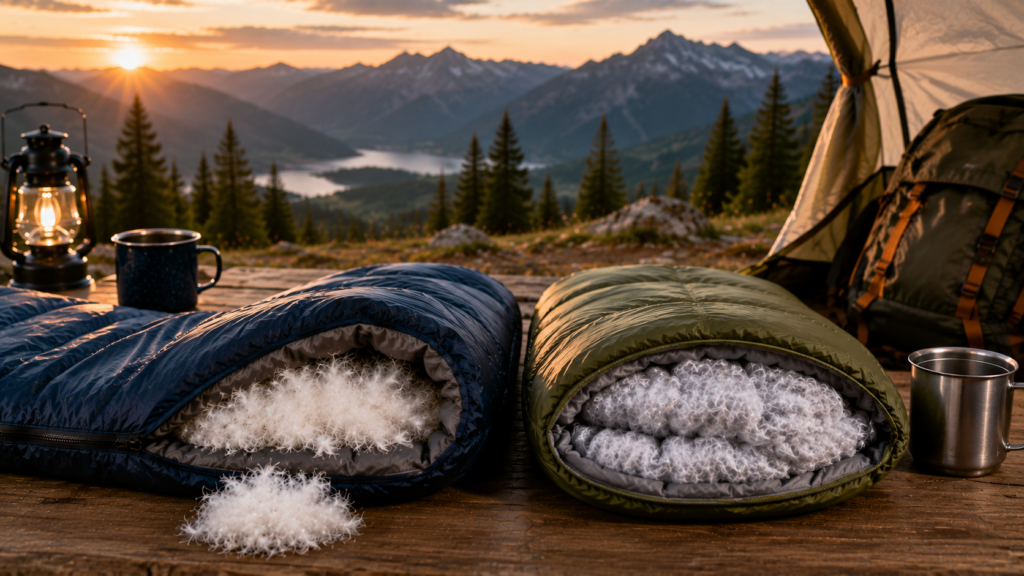
Another important decision when buying the Best Camping Sleeping Bags is choosing the insulation type. Most camping sleeping bags use either down insulation or synthetic insulation, and each has its own strengths.
Down Insulation
Down sleeping bags are filled with natural duck or goose down. They are known for providing exceptional warmth while remaining lightweight and highly compressible, making them a favorite among backpackers and mountaineers.
Pros
- Excellent warmth-to-weight ratio
- Compresses into a very small pack size
- Long lifespan with proper care
- Ideal for cold and dry conditions
Cons
- More expensive
- Loses insulation performance when wet
- Requires extra care during storage and cleaning
Synthetic Insulation
Synthetic sleeping bags use man-made fibers designed to trap heat even in damp conditions. They are generally more affordable and easier to maintain, making them a great option for beginners and frequent car campers.
Pros
- Performs well in wet or humid weather
- More budget-friendly
- Easy to clean and maintain
- Dries faster than down
Cons
- Heavier than down
- Bulkier when packed
- Slightly shorter lifespan
If you mainly enjoy car camping or weekend camping trips, a synthetic sleeping bag is often the best value. However, if you’re planning long backpacking adventures where every ounce matters, investing in a high-quality down sleeping bag may be worth the extra cost.
Final Thoughts
Choosing the Best Camping Sleeping Bags starts with matching your gear to the way you camp.Temperature rating, insulation type, sleeping bag shape, and packability all play an important role in your comfort outdoors.
For most beginners and casual campers, a quality synthetic sleeping bag offers excellent value, durability, and reliable performance in a wide range of conditions. If you’re focused on lightweight backpacking or camping in colder climates, a premium down sleeping bag may be worth the investment.
No matter which style you choose, investing in the right sleeping bag will improve your sleep, increase your comfort, and make every camping trip more enjoyable. A warm, restful night is one of the best ways to wake up ready for your next outdoor adventure.
Frequently Asked Questions (FAQ)
What temperature rating is best for Best Camping Sleeping Bags?
Choose a sleeping bag rated at least 10°F (5°C) lower than the coldest temperature you expect during your trip. This provides a comfortable safety margin for changing weather conditions.
Are down sleeping bags warmer than synthetic sleeping bags?
Yes. Down sleeping bags generally provide a better warmth-to-weight ratio and compress into a smaller size. However, synthetic sleeping bags perform better in wet or humid conditions and are usually more affordable.
Is a mummy sleeping bag better than a rectangular sleeping bag?
It depends on your camping style. Mummy sleeping bags are designed for maximum warmth and efficiency, while rectangular sleeping bags offer more space and comfort, making them ideal for car camping and warm-weather trips.
How long does a camping sleeping bag last?
A high-quality sleeping bag can last 10 years or more with proper care. Storing it loosely, keeping it dry, and cleaning it according to the manufacturer’s instructions will help extend its lifespan.
Can I use the same sleeping bag all year?
Some campers do, but it’s often better to choose a sleeping bag designed for the season. A 3-season sleeping bag is the most versatile option for spring, summer, and fall, while winter camping requires a bag with a much lower temperature rating.
Internal Links
Best Camping Tents (2026): How to Choose the Perfect Tent
Best Camping Chairs (2026): Comfortable Picks for Every Camper
Best Camping Tables (2026): Foldable & Portable Picks
Best Camping Cookware Sets (2026): Cook Like a Pro Outdoors
Related Guides
- How to Stay Warm While Camping in Cold Weather
- Sleeping Pad vs. Air Mattress: Which Is Better?
- Essential Camping Gear Checklist for Beginners
- How to Build a Comfortable Campsite Setup
Learn more about camping safety from the National Park Service.